

Fire Door Factories from China: The Top 10 Selection
2026-07-30
When fire strikes, the right door can mean the difference between escape and tragedy. China's booming manufacturing sector is full of fire door factories, but quality varies wildly. We've cut through the noise to bring you the top 10, spotlighting standout brands like FANSI, where rigorous testing meets real-world reliability. Curious who else made the list? Let's open the door to smarter safety.
Behind the Scenes: What Sets China’s Best Fire Door Manufacturers Apart
Walk into any top-tier fire door facility in China and the first thing you notice isn’t the machinery—it’s the silence around material sourcing. While many factories rely on generic steel coils, the best ones trace every batch back to specific mills known for consistent gauge and zinc coating. They keep their own stress-test logs, not just for certification audits, but because their floor managers genuinely distrust third-party reports. This quiet obsession with raw inputs carries through to the core fill: vermiculite boards are not simply bought off the shelf but are often density-checked and conditioned on-site to prevent warping before assembly.
The real separation happens in prototyping. Instead of rushing to fill an order, lead engineers will deliberately push a door sample to fail—overloading hinges, exposing it to uneven heat, even spraying salt mist into the seams—just to see where the first crack appears. These destructive tests aren’t mandated; they’re part of an internal culture that treats a fire door less as a commodity and more as a life-critical barrier. One plant superintendent summed it up bluntly: “We don’t build to the test standard; we build until the test no longer surprises us.”
Then there’s the post-production handling that most buyers never see. Rather than stacking finished doors into a shared warehouse, the standout manufacturers assign dedicated curing spaces with climate controls, letting coatings stabilize over days instead of hours. They also photograph every label and hinge mortise before crating, archiving those images against the order number—not for marketing, but because they’ve learned that a misaligned smoke seal found six months later can be traced back to a single Friday afternoon shift. That kind of traceability rarely makes a glossy brochure, yet it’s exactly what keeps a door performing when it matters most.
Certification Confidence: Navigating Global Standards with Chinese Factories
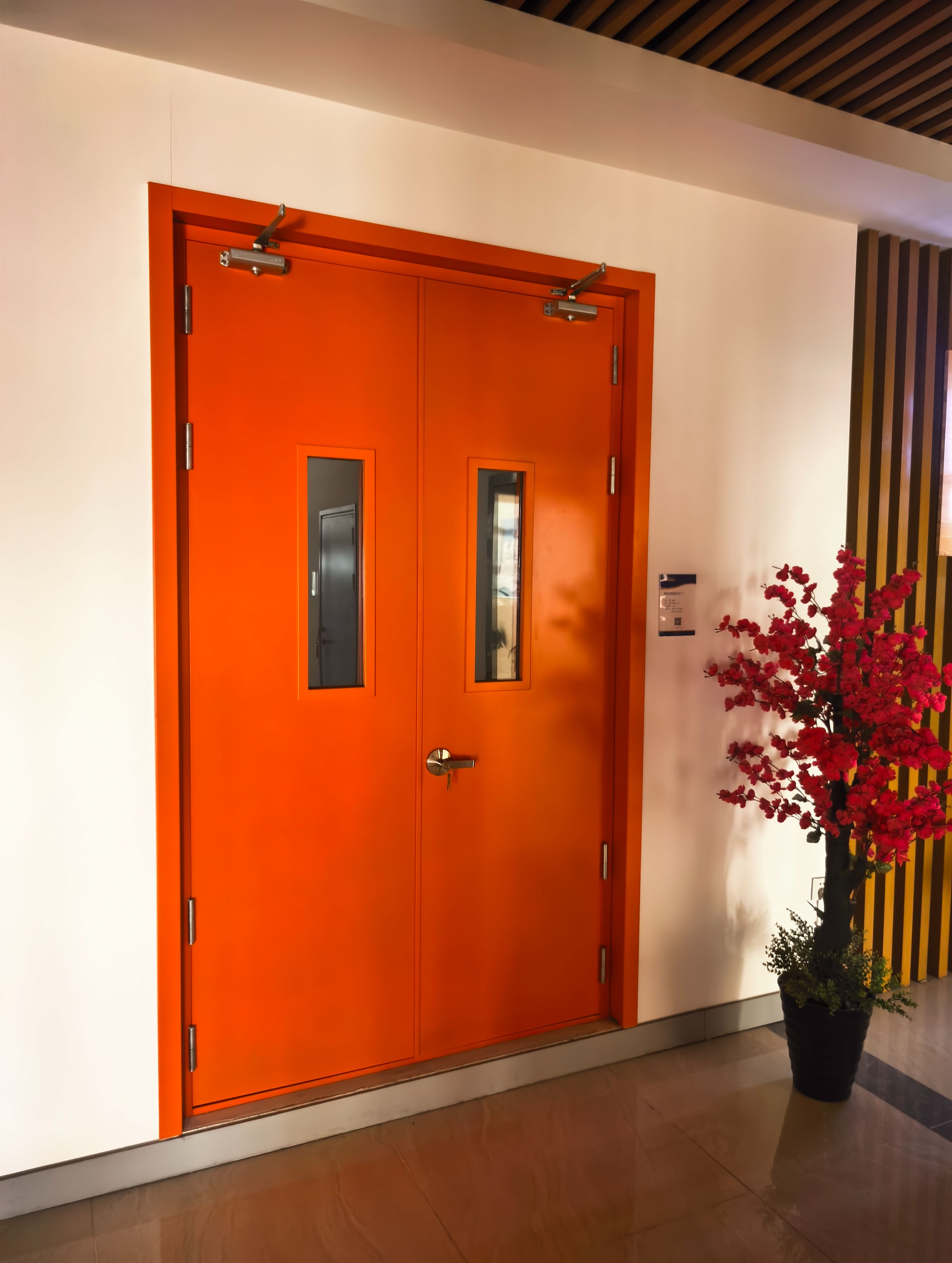
Working with Chinese factories often brings up questions about certifications and standards compliance. There's a common assumption that navigating global regulations from half a world away is inherently riskier, but the landscape has evolved significantly. Today, many manufacturers have deep experience with international requirements like CE, FDA, RoHS, or ISO—not just as boxes to tick, but as integral parts of their production DNA. The real challenge isn't finding a factory capable of meeting standards; it's verifying that their claimed certifications are genuine, current, and consistently applied to your product line.
Due diligence here means moving beyond a PDF of a certificate. Smart buyers request the actual audit reports, check the certification body's accreditation, and often bring in third-party inspection partners to conduct on-site verification. It's also critical to understand the scope—a factory might be ISO 9001 certified for one production process but not another. The most successful partnerships form when you treat compliance as a collaborative effort, with clear communication about exactly which standards matter for your market and a shared plan for ongoing testing, not just a one-time pre-shipment check.
Building certification confidence is less about policing and more about alignment. When a Chinese factory sees that you're invested in a long-term relationship and consistent order volumes, they have every incentive to maintain their compliance infrastructure. Many are also increasingly proactive, investing in in-house labs and staying ahead of regulatory changes in their clients' target markets. It's this mutual understanding—where the factory's certification credibility directly fuels your brand's market access—that turns a potential point of friction into a foundation for growth.
Innovation at the Core: Advanced Materials and Smart Technology in Fire Doors
Fire doors have long been a passive barrier, but integrating advanced materials transforms them into proactive safety components. Today, manufacturers are experimenting with intumescent seals that expand up to ten times their original volume under heat, creating a nearly impenetrable smoke and flame block. Composite cores featuring aerogel or graphene-enhanced layers offer remarkable thermal resistance while remaining lightweight, enabling easier handling and faster installation. These material breakthroughs not only extend integrity ratings beyond standard requirements but also open new possibilities in slim-profile designs that architects appreciate.
Smart technology is the next frontier, turning a simple door into a networked safety device. Embedded sensors can continuously monitor temperature, smoke density, and even door position, sending real-time data to building management systems. In the event of a fire, actuators enable automatic closing mechanisms that respond faster than human intervention, while integrated alarms and directional lights guide occupants toward safe exits. Some models even feature self-diagnostic capabilities, alerting maintenance teams to seal degradation or misalignment before they become liabilities.
The convergence of material science and intelligent electronics also addresses long-standing trade-offs between security, accessibility, and fire safety. For instance, magnetic hold-open devices linked to fire alarm panels allow doors to remain open for daily foot traffic yet release instantly upon detection of danger, all without compromising the door’s fire rating. As regulations evolve, such innovations are not simply add-ons but integral design elements that reflect a shift toward performance-based fire engineering, where every component works in concert to protect life and property more elegantly than ever before.
Tailored Solutions: Customization Capabilities That Surpass Expectations
Off-the-shelf solutions rarely capture the nuances of a business that has spent years refining its processes. That’s why we don’t ask you to bend your workflows to fit our tools—instead, we reshape every module, workflow, and interface to mirror how your teams actually work. From field-level permissions to fully branded dashboards, the end result feels like it was built in-house, without the years of development.
What sets our approach apart is how deeply we listen before a single line of code is written. We map out your operational reality, then adapt automation rules, data relationships, and reporting structures accordingly. Clients often tell us that features they assumed would take months to implement were delivered in days, simply because our platform was designed with this kind of flexibility at its core.
The real measure of customization, though, is how gracefully it handles the unexpected. When regulations shift or your business model pivots, your system evolves with you—no painful migrations or replacement cycles. We’ve seen manufacturers integrate proprietary quality checks, healthcare providers embed unique compliance steps, and retailers merge online and in-store logic seamlessly. That’s the kind of tailored agility that turns a software tool into a genuine competitive advantage.
Project Spotlight: Landmark Installations Across Continents
Some projects don't just occupy a space—they redefine it. Across continents, a handful of landmark installations have done exactly that, turning public squares, remote deserts, and bustling city centers into open-air galleries. These works often blur the line between art and engineering, inviting passersby to stop, look up, and rethink what a structure can be. They aren't merely decorative; they respond to the local climate, culture, or history, weaving themselves into the fabric of everyday life.
Take the metallic curves of a viewing platform balanced on a Norwegian fjord, its reflective surface catching the low Arctic sun and misting breath of the sea. Or the ghost-like wire mesh figures suspended above a Czech street, shifting with the wind but anchored in a centuries-old allegory. In the southern hemisphere, a field of glowing pods in an Australian botanical garden pulses gently at dusk, synced to the quiet hum of soil sensors. Each installation speaks a different material language—steel, light, tensile fabric—but all share a common thread: they root themselves so deeply in their setting that imagining the place without them feels almost impossible.
What makes these interventions endure isn't just their visual punch, but the slow dialogue they spark. A child racing through a fog sculpture in Beijing, an elderly couple resting on a granite bench carved with poetry in Cape Town—these everyday encounters give the work its real weight. Cross-continental in scope yet fiercely local in spirit, the installations remind us that the most resonant landmarks aren't always the tallest or the oldest. Sometimes they're the ones that simply listen to where they are, and then speak back in a voice no one saw coming.
Sustainable Practices: Eco-Friendly Manufacturing in Action
Walking through our factory floor, the hum of machinery is noticeably quieter these days, a subtle sign of the shift we’ve embraced. We’ve replaced energy-hungry motors with high-efficiency alternatives, and by redesigning our production flow, we’ve cut idle times that once drained resources. The changes aren’t just on paper—our monthly electricity bills have dropped by a third, and the air feels fresher, a small victory for both the team and the planet.
Water used to be an afterthought, but now we treat every drop with care. Our closed-loop system captures and purifies wastewater from cooling processes, redirecting it back into production without a trace of chemicals. It’s a quiet, unseen cycle that saves millions of liters a year, and the results ripple outward—local streams stay clearer, and the community trusts us a little more.
Material waste once piled up in corners, but we’ve turned that story around. Scraps from trimming and excess from prototypes aren’t trash anymore; they’re ground down, melted, or repurposed into new batches. Even our packaging has slimmed down, shedding layers of plastic for molded fiber that cradle products just as well. Walking the floor, it’s hard to spot the difference at a glance, but knowing that almost nothing leaves this building for a landfill makes the whole operation feel lighter.
FAQ
They combine advanced manufacturing techniques with rigorous testing standards. Many Chinese factories hold international certifications like UL, BS, or EN, which means their fire doors meet safety regulations in Europe, North America, and beyond. The scale of production also allows for competitive pricing without sacrificing quality, making them a practical choice for many construction projects.
Ask for third-party test reports and certificates from recognized bodies such as Intertek, TÜV, or Exova. Reputable factories will readily provide documentation showing fire resistance ratings and material composition. You can also request samples for independent lab testing or arrange a factory audit to inspect their production lines and quality control processes firsthand.
Yes, many Chinese factories excel at customization. They can produce doors in non-standard sizes, specific veneer finishes, or unique core materials like mineral wool or perlite boards. This flexibility caters to architects and contractors who need doors that match a building's aesthetic while meeting strict fire safety codes.
Lead times usually range from 4 to 8 weeks, depending on order complexity and factory workload. Custom projects may require additional time for design approval and materials sourcing. Most factories are transparent about timelines and will provide a production schedule after confirming the specifications.
Many of them provide detailed installation manuals and can arrange online guidance. Some larger manufacturers even have overseas technical teams or partner with local distributors to assist with complex installations. It's worth discussing this support upfront to avoid delays on site.
Steel fire doors and wooden fire doors with fire-rated cores dominate exports. You'll also find specialized options like acoustic fire doors, hospital-grade doors with lead lining, and blast-resistant fire doors. The variety reflects the diverse needs of international building projects.
Look beyond price. Evaluate their export track record, certifications relevant to your country, and references from past clients. A factory that responds promptly, offers clear documentation, and shows genuine interest in understanding your project requirements is often a reliable partner. Visiting their facility or sending a representative can also give you confidence in your selection.
Conclusion
What truly distinguishes China's top fire door manufacturers isn't merely scale or cost—it's an obsessive fusion of precision engineering and adaptive craftsmanship. Behind the scenes, these factories operate with vertically integrated production lines, where metallurgists and fire-safety engineers collaborate from the first coil of steel to the final hinge. They don't just chase certificates; they internalize global benchmarks like BS 476, UL 10C, and EN 1634-1, treating them as floor, not ceiling. This certification confidence is earned through in-house fire labs that simulate real-world conditions, often exceeding minimum durations to validate performance under shock and deformation. Meanwhile, innovation pulses at the core: advanced materials like graphene-infused intumescent seals and smart technology such as IoT-enabled sensors quietly redefine passive fire protection, turning doors into active safety nodes. The result isn't a commodity—it's a tailored solution, shaped by joint design workshops that customize everything from veneer matching to acoustic ratings, consistently surpassing expectations.
The proof, however, lies in landmark installations spanning continents. From high-speed rail hubs in Southeast Asia to heritage-sensitive retrofits in European capitals, these doors perform in climates ranging from arctic freeze to tropical humidity, yet their aesthetic integrity remains untouched. Behind this global footprint is a quiet revolution in sustainable practices: closed-loop water systems, solar-powered kilns, and steel scrap reprocessed within hours, not days. The selection of a top 10 factory isn't about picking a supplier; it's about choosing a partner that merges relentless testing with environmental stewardship, ensuring that every fire door delivered is not just a barrier against flames, but a long-term asset built with tomorrow in mind.
Contact Us
Contact Person: Liam
Email: [email protected]
Tel/WhatsApp: (+86)16658531012
Website: https://www.fansifiredoor.com