
Top 10 Q235 Steel Plate Suppliers for Quality and Reliability
2026-05-07
Finding a dependable Q235 steel plate supplier isn't just about price—it's about consistency, tight tolerances, and on-time delivery. In a market flooded with options, who truly delivers quality you can count on? We've cut through the noise to bring you the top 10 suppliers that set the standard for reliability. Among them, Sanhe Steel stands out for its rigorous testing and customer-first approach. Whether you're sourcing for construction, fabrication, or heavy machinery, this list will point you toward partners that treat your project as seriously as you do. Let's dive in.
Decoding Quality: What Makes Q235 Steel Reliable
At its core, Q235 steel's reliability stems from a well-balanced composition. The carbon content hovers around 0.2%, just enough to confer strength without making the material brittle. Manganese and silicon are present in modest amounts, improving toughness and deoxidizing the melt during production. This recipe has been refined over decades, so you get a steel that behaves predictably—whether you're cutting, welding, or bending it, it doesn't throw surprises.
In the workshop and on the construction site, Q235 proves itself through its forgiving nature. Its yield strength of roughly 235 MPa means it can carry typical structural loads without permanently deforming, yet it remains ductile enough to be drawn into wire, punched into brackets, or rolled into beams without cracking. Welders appreciate it because the low carbon equivalent drastically reduces the risk of cold cracking, even without preheating. This practical workability translates directly into consistent, trustworthy performance across thousands of everyday applications.
Seasoned engineers often reach for Q235 not because it's exotic, but because it delivers on its promises. From warehouse frames that endure decades of forklift vibrations to agricultural machinery parts that face constant wear, this steel holds up. Its reliability isn't about a single remarkable trait; it's about doing everything adequately well, at a reasonable cost, with no hidden flaws. That quiet dependability is why it remains a backbone material in manufacturing and civil engineering.
Must-Have Certifications for Steel Suppliers
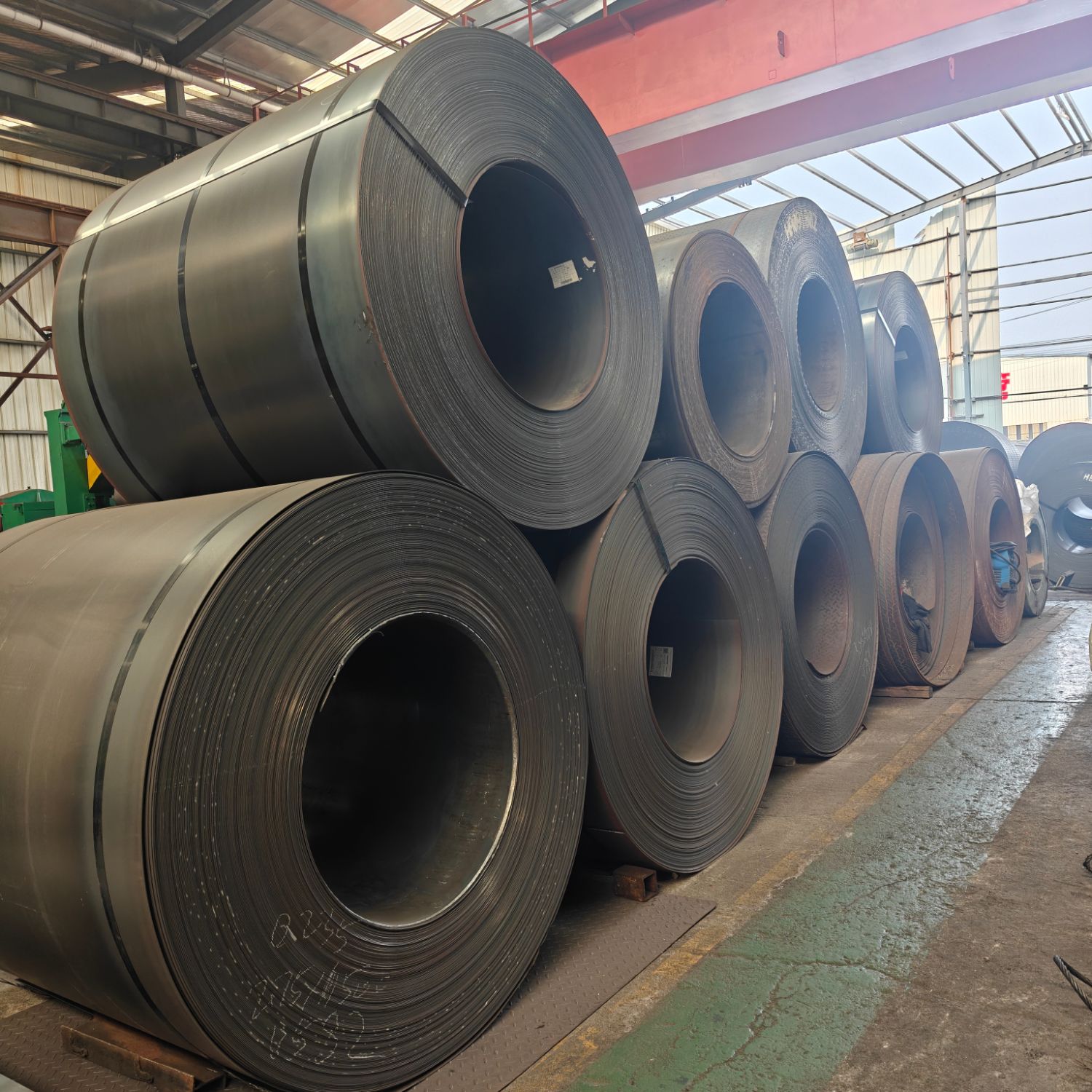
Steel suppliers that invest in rigorous certification programs often stand out in a crowded marketplace. The ISO 9001 standard, for instance, is more than a piece of paper; it reflects a deeply embedded quality management system that touches everything from raw material sourcing to final inspection. When a supplier holds this certification, it signals a commitment to consistent product quality and continuous improvement, which can directly reduce the risk of non-conforming materials reaching a customer's production line.
Beyond quality, environmental and safety credentials have become non-negotiable for many buyers. Certifications like ISO 14001 and ISO 45001 demonstrate that a steel supplier not only manages its environmental footprint but also actively protects its workforce. These standards are increasingly woven into tender requirements, and suppliers lacking them may find themselves excluded from major infrastructure or energy projects where sustainability and social responsibility are under strict scrutiny.
For suppliers serving niche sectors, specialized certifications unlock doors that generic credentials cannot. In the oil and gas industry, API monogramming or compliance with API Q1 quality specifications is often a mandatory precondition for doing business. Similarly, CE marking or certifications against EN standards are essential for structural steel entering European markets. These endorsements provide independent verification that products meet the exacting technical demands of critical applications, giving engineers and procurement teams the confidence to specify without hesitation.
Behind the Scenes: Manufacturing Processes and Quality
Walking onto the production floor, you immediately notice the rhythm of the place—every machine moves with a purpose, every operator knows their part in a carefully choreographed routine. It’s not just about assembling pieces; it’s about a deep understanding of how materials behave under stress, how temperatures shift just right during treatment, and how the slightest misalignment can throw off an entire batch. From raw material inspection to final assembly, each step is tied together by a quiet commitment to doing things right, not just fast.
Quality here isn’t a checklist ticked off at the end of the line; it’s stitched into the workflow from day one. Take the calibration checks, for example—they happen so frequently that they’ve become second nature to the team, almost like a reflex. You’ll find seasoned engineers and newer hands putting prototypes through tests that mimic years of wear in a matter of hours, flagging even the smallest inconsistencies before they can ever reach a customer. And when a problem does surface, the approach isn’t about finding blame but unraveling the process thread by thread until the root cause is clear. There’s a kind of shared pride in that, a feeling that everyone owns the standard.
What ties it all together is the steady feedback loop between design and manufacturing. It’s not unusual to see product developers and line operators huddled around a bench, debating a minor tweak that could make assembly smoother without sacrificing durability. Those conversations might last ten minutes or stretch over a week, but they’re driven by a common goal: making sure what leaves the factory lives up to the name stamped on it. In an industry where shortcuts are tempting, this plant leans into the slower, more deliberate path—because they trust their customers will feel the difference in the long run.
Testing Supplier Reliability: More Than Just Products
Evaluating a supplier’s reliability goes far beyond checking product samples or spec sheets. It’s about digging into their consistency, communication patterns, and how they handle disruptions. A truly dependable supplier operates transparently, shares real-time inventory data, and willingly opens their production floor for audits. Without these deeper checks, you risk partnering with a manufacturer that crumbles under pressure or cuts corners when things get tight.
Another crucial yet often overlooked dimension is their willingness to invest in long-term process improvements rather than quick fixes. Look for suppliers who proactively suggest cost-saving design tweaks or material alternatives—not just those who agree to every demand without question. A supplier that challenges your assumptions constructively often demonstrates far greater reliability than one that simply nods along, because their focus stays fixed on durable outcomes instead of short-term appeasement.
Cost-Effective Sourcing Without Compromising Quality
Finding suppliers that balance affordability with consistent quality often feels like chasing a mirage. The trick lies in shifting focus from the lowest sticker price to the total cost of ownership, where factors like material longevity, production waste, and logistics quietly shape the real expense. Diligent vetting, from factory audits to sample runs, reveals whether a cheaper option will cost more in returns or rework later.
Building lasting relationships with a curated few vendors often outperforms broad, transactional sourcing. When suppliers understand your benchmarks, they proactively suggest minor material or process tweaks that maintain standards while trimming costs. This mutual commitment turns sourcing into a collaborative refinement loop rather than a series of price haggles, unlocking savings that purely bid-based models overlook.
Quality doesn't have to be the sacrificial lamb on the altar of cost-cutting. Leveraging data on defect rates, lead-time variance, and hidden fees lets you negotiate from a position of clarity, not just clout. Sometimes the most economical choice is a moderately priced supplier with a near-perfect track record, proving that smart spending beats blind cost slashing every time.
Proven Success Stories in Industrial Applications
A Midwest auto parts manufacturer faced recurring failures in their hydraulic presses, causing costly line stoppages. By integrating vibration sensors coupled with pattern recognition software, they began predicting bearing wear days in advance. This shift from reactive to predictive maintenance saved over $2 million in the first year alone, primarily from avoiding rush orders of spare parts and overtime labor.
In the chemical processing sector, a specialty polymers plant used spectral analysis of mixer torque data to optimize catalyst injection rates in real time. The adjustment, which feels almost intuitive to seasoned operators, was systematized and led to a 14% yield improvement without altering raw materials. What’s remarkable is that the solution was retrofitted onto decades-old equipment, disproving the notion that only greenfield plants can benefit.
These examples aren’t outliers. Across industries, from food packaging to mineral processing, similar pragmatic applications have quietly transformed margins. The common thread is a focus on augmenting the workforce instead of replacing it, turning sensor data into actionable insights that maintenance teams and process engineers can trust and act upon without needing a data science degree.
FAQ
Look beyond the glossy brochures. A supplier's track record with on-time deliveries, transparent communication, and consistent material certifications matters most. Request mill test certificates for recent batches and cross-check with industry standards like GB/T 700 or ASTM equivalents. It's also worth noting how they handle complaints—fast resolution often signals a customer-focused operation.
Quality can differ significantly. While Q235 defines basic mechanical properties, the actual performance depends on the raw materials, rolling process, and heat treatment control. Reputable mills maintain tighter tolerances on chemical composition and surface finish. Subpar plates might show lamination defects or inconsistent hardness, leading to welding issues later.
Ask for third-party inspection reports from agencies like SGS, Bureau Veritas, or TÜV. Reliable suppliers will have no problem sharing these, along with full traceability from the heat number to the final plate. Some even offer pre-shipment sample testing. If a supplier hesitates to provide such documents, it's a warning sign.
Many do, and it’s a differentiator. Leading suppliers often provide cut-to-length, edge trimming, shot blasting, and primer coating. Some can manage complex logistics, including just-in-time delivery to your plant. These services reduce your in-house processing costs and lead times.
Price matters, but focusing solely on the lowest quote can backfire. Extremely cheap plates might be non-prime or fail to meet specs, causing costly rework or project delays. Instead, evaluate the total cost of ownership: material cost, freight, potential waste, and after-sales support. A mid-range price with proven consistency is often the smart buy.
China remains the largest producer, with mills like Baowu Group, Ansteel, and Shougang supplying a huge volume of Q235. However, South Korea (POSCO), Japan (Nippon Steel), and India (Tata Steel) also produce comparable structural steel grades. The key is to partner with the mill directly or a top-tier distributor, not just any trader.
One frequent error is skipping a detailed material specification in the purchase order. Just asking for “Q235” leaves room for variability—chemical composition, impact test temperature, and dimensional tolerances should be spelled out. Another pitfall is ignoring the supplier’s financial stability; a bankrupt supplier can’t deliver, no matter how good the quote looked.
Communication and mutual respect are key. Be clear about your future demand forecasts so they can reserve capacity. Pay on time and give constructive feedback. In return, a good supplier will prioritize your orders during tight markets and may offer volume discounts or technical advice. Treat them as a partner, not just a vendor.
Conclusion
Finding suppliers of Q235 steel plate who consistently deliver both quality and reliability involves more than scanning a price list. The best providers understand that true dependability starts with the chemical composition and mechanical properties that define the grade itself—yield strength, elongation, and weldability are non‑negotiable. They also operate with transparency around the manufacturing path, whether the plate comes from a basic oxygen furnace or an electric arc process, because controlled rolling and normalizing directly influence grain structure and consistency. Certifications like ISO 9001 and mill‑specific test reports aren’t just paperwork; they’re a supplier’s baseline promise that every batch meets stated specifications. When evaluating a vendor, experienced buyers look past glossy brochures and track records: on‑time delivery, accurate documentation, and the ability to handle unexpected demand spikes reveal whether a supplier is truly reliable.
Cost‑effective sourcing is never about the lowest per‑ton price. It’s about balancing initial cost with the hidden expenses of inconsistent material—rework, machine downtime, or even project delays. The most strategic partners offer value through inventory programs, flexible payment terms, and technical support that helps you select the right plate for the job, whether it’s structural framework or heavy machinery components. Real‑world success stories, such as a bridge fabrication project that met tight deadlines because the supplier pre‑cut and delivered plates within a three‑day window, or a pressure vessel manufacturer that reduced waste by 12% after switching to a supplier with tighter thickness tolerances, demonstrate how the right partnership translates into tangible outcomes. In a crowded market, the top ten suppliers distinguish themselves not by claims, but by proven performance and a genuine commitment to keeping your operations running smoothly.
Contact Us
Contact Person: Zoey
Email: [email protected]
Tel/WhatsApp: +86 15865577002
Website: https://www.sanhesteels.com