
Top Shipbuilding Steel Plate Manufacturers for Durable Marine Construction
2026-05-19
Building a vessel that endures the harshest ocean conditions starts with one critical choice: the steel plate. Among the top shipbuilding steel plate manufacturers for durable marine construction, Sanhe Steel stands out for its relentless commitment to quality and innovation. But what truly separates a reliable hull from a costly failure? In this blog, we’ll dive into the key players shaping the industry, the advanced materials they produce, and why selecting the right partner is more than just a purchase—it’s a strategic move for long‑term marine performance.
Pioneers in Marine-Grade Steel Solutions
From the earliest days of ocean exploration, our team has been quietly shaping the backbone of marine infrastructure. We don't just supply steel—we engineer alloys that shrug off salt spray, resist pitting, and withstand the profound pressures found hundreds of meters below the surface. That kind of expertise isn't built in a boardroom; it's forged through decades on the water, in the shipyards, and right alongside our clients.
What sets us apart is an almost obsessive focus on the metallurgy that makes marine-grade steel reliable. We've developed proprietary blends with precisely balanced chromium and nickel, ensuring that even in the most aggressive tidal zones, our products maintain their integrity. It's not unusual for our team to spend months testing a single alloy in simulated real-world conditions before it ever reaches a customer. That patience is rare, but necessary when the ocean is your testing ground.
We've grown to support everything from small coastal fishing fleets to massive deep-sea energy projects. And while our steel can be found in hulls, platforms, and pilings around the world, we’re still driven by a simple belief: if something is worth building at sea, it deserves a foundation that will outlast the elements. No shortcuts. No compromises. Just stubborn perseverance against corrosion.
Forging Steel for the World’s Toughest Vessels
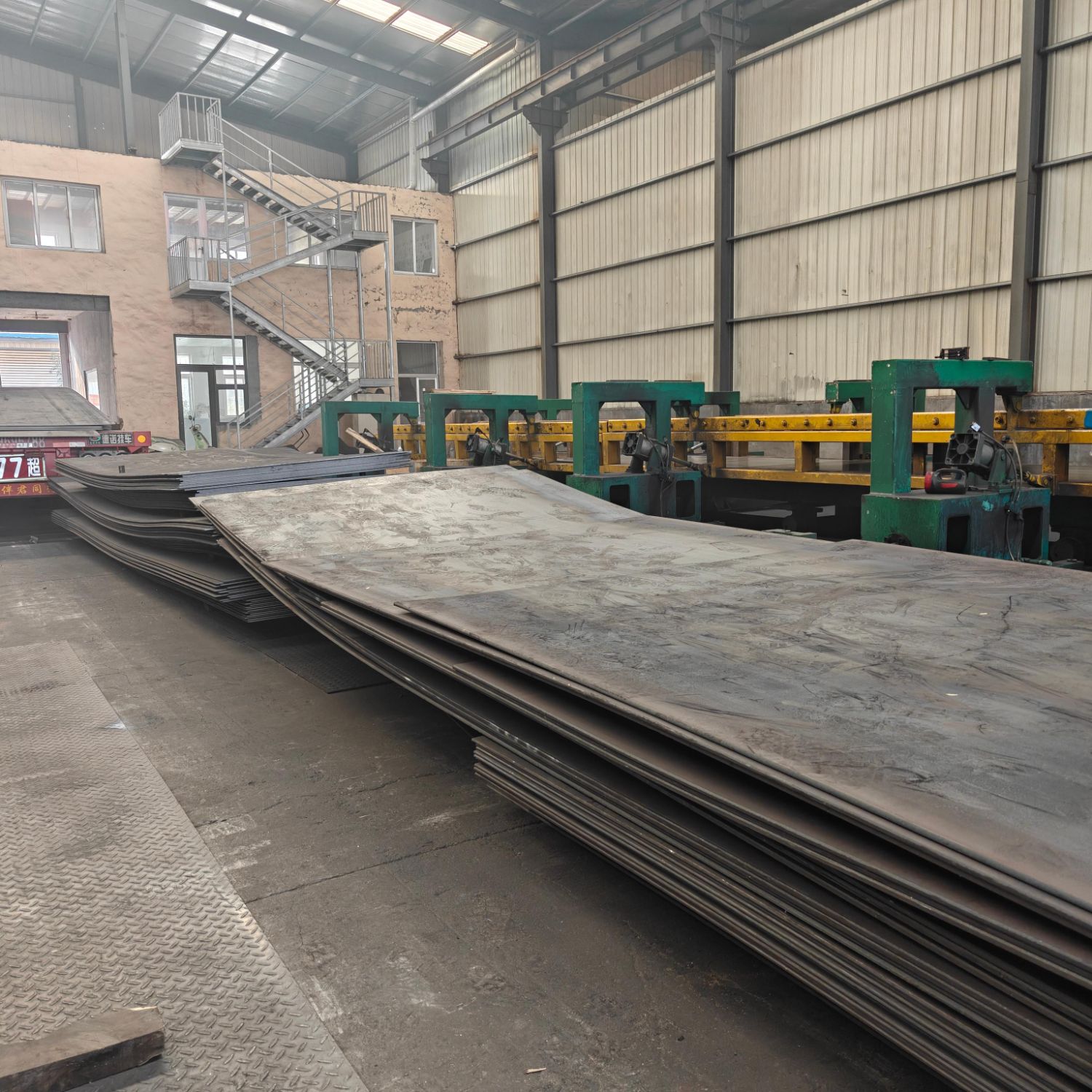
There’s a rare breed of steel that doesn’t just endure—it thrives under conditions that would buckle lesser materials. This isn’t your run-of-the-mill alloy; it’s crafted through a forging process that borders on obsessive. Every billet is heated with painstaking precision, then pressed and shaped under thousands of tons of force. The aim isn’t simply to remove impurities, but to align the grain structure so completely that the metal gains a kind of directional toughness—strong exactly where it needs to be. It’s the sort of obsessive craftsmanship you’d expect for vessels that explore the deepest trenches or contain reactions hot enough to melt rock.
What sets this steel apart isn’t a secret formula—it’s the refusal to cut corners. In an age of automated efficiency, the most critical stages still rely on human judgment. Master forgers read the glow of the metal, adjusting temperatures and forces by intuition refined over decades. Post-forging, each piece undergoes thermal cycling that can last weeks, letting the crystalline lattice settle into an almost serene equilibrium. The result is a material that doesn’t flinch at cryogenic cold or screaming heat, and shrugs off corrosion like an afterthought. It’s not super steel; it’s stubborn steel—made by people who simply won’t let it fail.
Of course, the real test is time. These forgings don’t just pass inspections—they outlive the very machines that shaped them. Welded into the bellies of submarine rescue craft or the hearts of next-gen reactors, they become silent guardians. When a pressure hull descends beyond 6,000 meters, every atom in the steel is holding back a fist of ocean that would crush a tank flat. And yet, the forged structure stands calm, because it was built from the start to carry that burden without drama. That’s the quiet mark of steel that’s been forged—not just manufactured—for the world’s most unforgiving demands.
The Backbone of Modern Shipbuilding
Steel remains the silent force shaping today’s vessels, yet it’s the fusion of advanced alloys and precision engineering that truly defines modern hulls. Without the quiet evolution of high-tensile steel grades, the colossal container ships and icebreakers navigating harsh seas simply couldn’t exist. This material isn’t just about strength—it’s about flexibility, corrosion resistance, and the ability to absorb immense stress without fracturing, making every welded seam a testament to metallurgical progress.
Beneath the surface, modular construction techniques have revolutionized how ships come together. Instead of piece-by-piece assembly, entire sections—engine rooms, accommodation blocks, even bow units—are built in parallel and then seamlessly joined. This approach slashes build times and improves quality control, but it demands extraordinary precision. A misalignment of millimeters can cascade into costly delays, so the backbone isn’t merely physical; it’s a digital thread of 3D modeling and laser tracking that ensures every module fits perfectly before a single plate is cut.
Welding, often overlooked, is the true connective tissue of shipbuilding. Automated and robotic systems now lay down flawless beads in conditions that would challenge even the most skilled human hands. Yet it’s the interplay between these machines and seasoned welders—who interpret real-time data and adjust parameters on the fly—that delivers hulls capable of enduring decades at sea. This blend of art and automation is what keeps modern shipyards competitive, turning raw steel into vessels that silently carry the world’s commerce across oceans.
Precision Engineering for Harsh Maritime Environments
Marine systems face a relentless assault from salt spray, extreme pressure cycles, and corrosive humidity that would cripple ordinary equipment within weeks. We engineer every component to thrive in these conditions, selecting alloys and composites that actively resist pitting and galvanic corrosion. Seals, coatings, and surface treatments are chosen not just for durability, but for their ability to maintain precise tolerances when thermal expansion and mechanical stress are pushing materials to their limits.
Beyond material selection, the real challenge lies in maintaining calibration and reliability without constant human intervention. Our designs incorporate self-monitoring sensors and adaptive control algorithms that compensate for minor drift before it becomes a failure point. By stress-testing prototypes in accelerated salt-fog chambers and simulated deep-sea pressure vessels, we uncover failure modes long before deployment. It’s a philosophy born from decades of offshore project data, where a single sensor malfunction can endanger a multi-million-dollar operation.
Global Leaders in Ship Plate Manufacturing
The shipbuilding industry leans heavily on a handful of specialized mills that dominate the global supply of high-strength hull plates. Mills in South Korea, China, and Japan not only lead in volume but also in the development of advanced grades like EH36 and FH40, which are crucial for large container vessels and ice-class ships. Their integrated production lines and continuous casting capabilities ensure uniform quality and reliable delivery schedules for demanding shipyard projects.
Outside East Asia, European producers have carved a niche in specialized plate segments, particularly for naval and offshore applications. Companies in Germany and Italy supply plates with superior toughness and corrosion resistance, often tailored for submarines, LNG carriers, and arctic exploration vessels. These manufacturers focus on small-batch precision, adding value through heat treatment and strict certification processes that meet military and classification society standards.
A defining shift in recent years has been the rise of Indian and Southeast Asian mills aiming to break into the mid-tier market. With expanding blast furnace capacity and new plate mills, they undercut traditional suppliers on cost for standard grade plates, intensifying price competition. Yet, their ascent is tempered by the need to achieve consistent mechanical properties and gain approvals from major class societies, a process that can take years.
Driving Durability in Marine Construction
Marine environments present aggressive conditions that rapidly degrade conventional building materials. Salt spray, cyclic wetting and drying, and biological growth all conspire to shorten the service life of docks, piers, and offshore platforms. Achieving true durability means moving beyond simple protective coatings and embracing a systems-level approach that integrates corrosion-resistant alloys, advanced concrete admixtures, and cathodic protection from the earliest design stages. The goal is to create structures that not only withstand the elements but also minimize maintenance interventions over decades of exposure.
Material selection forms the backbone of long-lasting marine construction. Stainless steels, particularly duplex grades, offer a compelling balance of strength and chloride resistance, while high-performance concrete formulations with supplementary cementitious materials reduce permeability and enhance resistance to sulfate attack. Even the choice of aggregates matters—non-reactive, dense aggregates limit crack propagation and water ingress. Pairing these materials with thoughtful detailing, such as eliminating sharp corners that concentrate stress and ensuring adequate concrete cover over reinforcement, dramatically extends the lifespan of a structure before major repair becomes necessary.
Operational excellence after construction is equally critical. A proactive monitoring strategy can identify early-stage corrosion or structural degradation long before it becomes visible. Techniques like half-cell potential mapping and ultrasonic thickness gauging provide real-time insight into the health of a structure, allowing asset managers to prioritize repairs based on actual condition rather than arbitrary time intervals. By combining robust materials, intelligent design, and data-driven maintenance, marine infrastructure can reliably serve its purpose for generations, even in the harshest coastal environments.
FAQ
The plates need excellent toughness, even at low temperatures, to withstand the dynamic loads and impact forces at sea. Weldability is another key factor, allowing for efficient and reliable joining during construction. Strong corrosion resistance is essential to counteract constant exposure to saltwater and humidity, often achieved through specific alloy compositions or protective coatings. Finally, consistent mechanical properties across the plate ensure uniform structural integrity.
Several global producers have built strong reputations. South Korea’s POSCO and Hyundai Steel are known for their advanced production lines and high-grade marine steels. Japan’s Nippon Steel and JFE Steel have long histories of delivering consistent quality. In Europe, ArcelorMittal supplies a broad range of certified plates, while in China, Baosteel and Ansteel are major suppliers that meet international standards. These companies typically hold multiple classification society approvals.
They implement strict quality control throughout production, from raw material selection to final inspection. Advanced refining processes reduce impurities like sulfur and phosphorus, improving ductility and corrosion resistance. Controlled rolling and thermo-mechanical control processing (TMCP) is used to achieve fine grain structures for strength and toughness. Plates are also subjected to rigorous testing, including ultrasonic examination and Charpy impact tests at specified temperatures, to verify compliance with classification society rules.
The common grades are those approved by classification societies, such as AH36, DH36, and EH36, which differ mainly in their guaranteed toughness at sub-zero temperatures. For structures under high stress or in critical zones, higher-strength grades like AH40, DH40, and EH40 are utilized. Some manufacturers also offer specialized grades for niche applications, such as those with enhanced resistance to hydrogen-induced cracking in sour service or extra-thick plates for large container ships.
Seawater creates an aggressive electrochemical environment that accelerates material degradation. Without proper alloy composition, such as additions of chromium, nickel, or copper, steel can suffer uniform thinning, pitting, or stress corrosion cracking. Protective coatings and cathodic protection systems rely on a stable substrate, so the inherent corrodability of the steel directly influences maintenance intervals and total lifecycle cost. In shipbuilding, a plate that resists corrosion well helps extend the vessel’s service years and reduces dry-docking frequency.
Normal-strength hull steel, like Grade A or B, offers minimum yield strengths around 235 MPa, suitable for less stressed parts of a vessel. High-strength steels, denoted by the 'H' in AH36 or DH36, provide higher yield strengths—typically 355 MPa or more—allowing designers to use thinner sections. This reduces overall weight while maintaining structural capacity, which can improve fuel efficiency and cargo capacity. However, high-strength grades require more careful welding procedures to avoid cracking or heat-affected zone issues.
Recognized certifications include those from the American Bureau of Shipping (ABS), Lloyd’s Register (LR), DNV (now DNV GL), Bureau Veritas (BV), ClassNK, and others. These organizations establish standards for chemical composition, mechanical properties, and testing protocols. A plate stamped with such approval has been produced under audited processes and meets the specific strength, toughness, and weldability requirements for marine construction. Many shipyards will only accept steel with the relevant class endorsement based on the vessel’s registration.
Thicker plates are used in the bottom shell and along the main deck to handle high bending moments and slamming forces, while thinner plates may suffice for upper side shells. Larger plate sizes reduce the number of weld seams, which can speed up block assembly and improve structural fatigue life by minimizing weld-related stress risers. However, maximum dimensions are often limited by rolling mill capabilities and transportation logistics. The design must balance strength, weight, and constructability to achieve a durable and cost-effective vessel.
Conclusion
In the demanding world of marine construction, a select group of steel plate manufacturers has risen to prominence by consistently delivering materials that form the literal backbone of modern shipbuilding. These pioneers in marine-grade steel solutions have perfected the art and science of forging steel for the world’s toughest vessels, ensuring that every hull, deck, and structural component can withstand the relentless assault of saltwater, extreme pressures, and dynamic loads. Their expertise lies not only in metallurgy but in precision engineering tailored for harsh maritime environments—where a single flaw can compromise safety and longevity. By merging advanced alloy formulations with rigorous quality controls, these companies produce plates that offer superior weldability, corrosion resistance, and impact toughness, meeting stringent classification society standards and enabling shipyards to build everything from massive container carriers to specialized offshore platforms with unshakable confidence.
As global leaders in ship plate manufacturing, these firms are driving durability in marine construction through continuous innovation and sustainable practices. They invest heavily in research to develop high-strength, low-weight steels that improve fuel efficiency while maintaining structural integrity over decades of service. Their operations span continents, supplying major shipbuilders with certified plates that can be traced back to the very heat of the furnace—a transparency that fosters trust and long-term partnerships. Beyond production, they collaborate closely with designers and fabricators to fine-tune steel properties for specific applications, from ice-class vessels navigating polar routes to naval ships requiring ballistic protection. In an industry where reliability is non-negotiable, these manufacturers remain the unseen guardians of maritime progress, forging the steel that shapes the future of global trade and defense.
Contact Us
Contact Person: Zoey
Email: [email protected]
Tel/WhatsApp: +86 15865577002
Website: https://www.sanhesteels.com